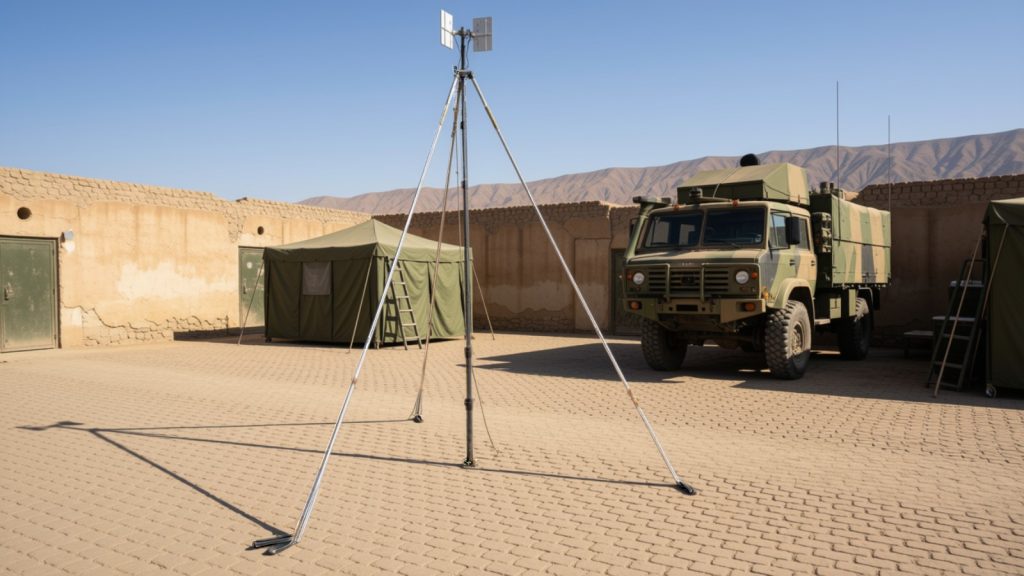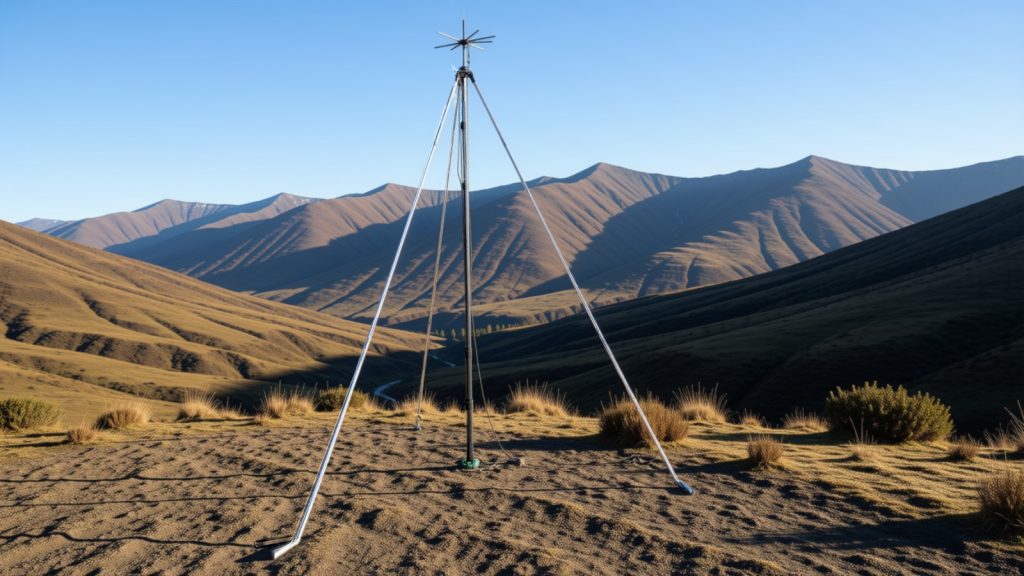



Antennas are essential components of wireless systems, enabling the transmission and reception of radio frequency signals. Selecting the right antenna depends on a clear understanding of key technical factors, including frequency range, radiation pattern, gain, environmental conditions and installation requirements. Getting this balance right is essential to ensure reliable performance and efficient operation.
Communication
In communication applications, antennas enable reliable wireless exchange of information between transmitting and receiving equipment. These systems may support point-to-point links, network coverage, or temporary communication setups. The design focus in such applications typically includes signal clarity, appropriate coverage patterns and stable performance within the required frequency band. Directional antennas may be used where focused transmission is needed, while omnidirectional designs are often selected to provide broader area coverage. In each case, the objective is consistent signal propagation aligned with operational requirements.
Data Transmission
Antennas are widely used in systems that transmit data between remote devices and central platforms. Applications include telemetry networks, remote monitoring systems and machine-to-machine communication. In these environments, reliable signal integrity is essential to ensure accurate and uninterrupted data transfer. Factors such as bandwidth, gain characteristics and resistance to environmental interference are central to system performance. The antenna must be matched carefully to the communication architecture in order to support dependable connectivity.
Mobile and Vehicle Applications
Certain applications require antennas to operate on mobile platforms, including vehicles, trailers or transportable systems. These deployments introduce additional considerations such as vibration resistance, compact mounting arrangements and structural stability. Antennas used in mobile applications must maintain consistent performance despite movement, varying terrain and environmental exposure. Integration with power and communication systems is also an important aspect of these deployments, ensuring seamless operation during transit and when stationary.
Temporary and Rapid Deployment
In some situations, antenna systems must be deployed quickly to establish wireless capability. These applications may involve planned events, temporary works, site investigations or emergency response scenarios. Ease of installation, portability and compatibility with supporting infrastructure are key requirements. The antenna must be capable of rapid integration while maintaining the necessary technical performance for the duration of its deployment. Application-driven design ensures that operational demands are met without compromising reliability.
High-Frequency and Directional Applications
Certain applications require high-frequency operation or highly directional signal transmission. These systems are often used for point-to-point communication links or where efficient spectrum usage is important. Directional antennas concentrate signal energy towards a specific target, improving link performance and reducing unwanted signal dispersion. Design considerations in these applications include beamwidth, alignment precision and gain performance, all of which must correspond to the intended operational use.
Monitoring and Sensing
Antennas are frequently used within monitoring and sensing systems that rely on wireless data transmission. These applications may involve environmental sensors, remote telemetry equipment or distributed instrumentation. In such cases, consistent signal performance is essential to support continuous data flow. The antenna must remain reliable over time, often in exposed environments, ensuring that information gathered from remote locations can be transmitted accurately to control or analysis centres.
Broadcast
In broadcast and distribution applications, antennas transmit radio or television signals across defined coverage areas. These systems are engineered to maintain stable signal quality during continuous operation and to deliver predictable radiation patterns. Frequency allocation, structural durability and long-term reliability are central considerations. The antenna must operate within designated spectrum bands while providing consistent performance throughout its service life.
Environmental Considerations
Across all applications, environmental factors play an important role in antenna performance. Wind loading, temperature variation, precipitation and potential sources of electromagnetic interference must be considered during specification and installation. Material selection, protective design features and compatibility with supporting structures contribute to long-term reliability. An application-based approach ensures that environmental conditions are addressed as part of the overall system design.
Engineering Principles in Antenna Selection
Selecting an appropriate antenna requires careful evaluation of technical parameters, including frequency range, radiation pattern, gain, polarisation and mounting configuration. These characteristics must align with the functional requirements of the application to ensure effective system performance. Integration with supporting infrastructure, such as mast systems or fixed installations, must also be considered to maintain both structural stability and signal integrity. Proper specification and installation are fundamental to achieving reliable wireless operation.
Antennas form a critical part of modern wireless infrastructure, supporting communication, data transmission, monitoring and distribution across a wide range of applications. By focusing on the functional requirements of each deployment, rather than industry alone, an application-based approach ensures that antenna systems are engineered to meet defined technical, environmental and operational criteria. Through appropriate design and specification, antennas provide the reliable interface required for effective wireless connectivity in diverse and demanding environments.
Get in touch with our team today: sales@smcgroupglobal.com, or call +442380246200 (UK). You can also request a quote here.