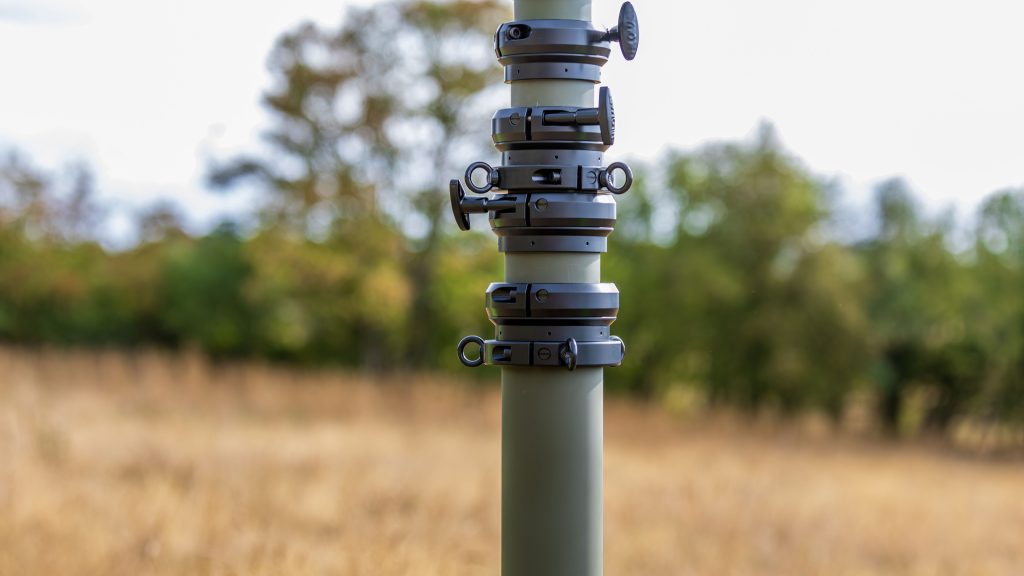


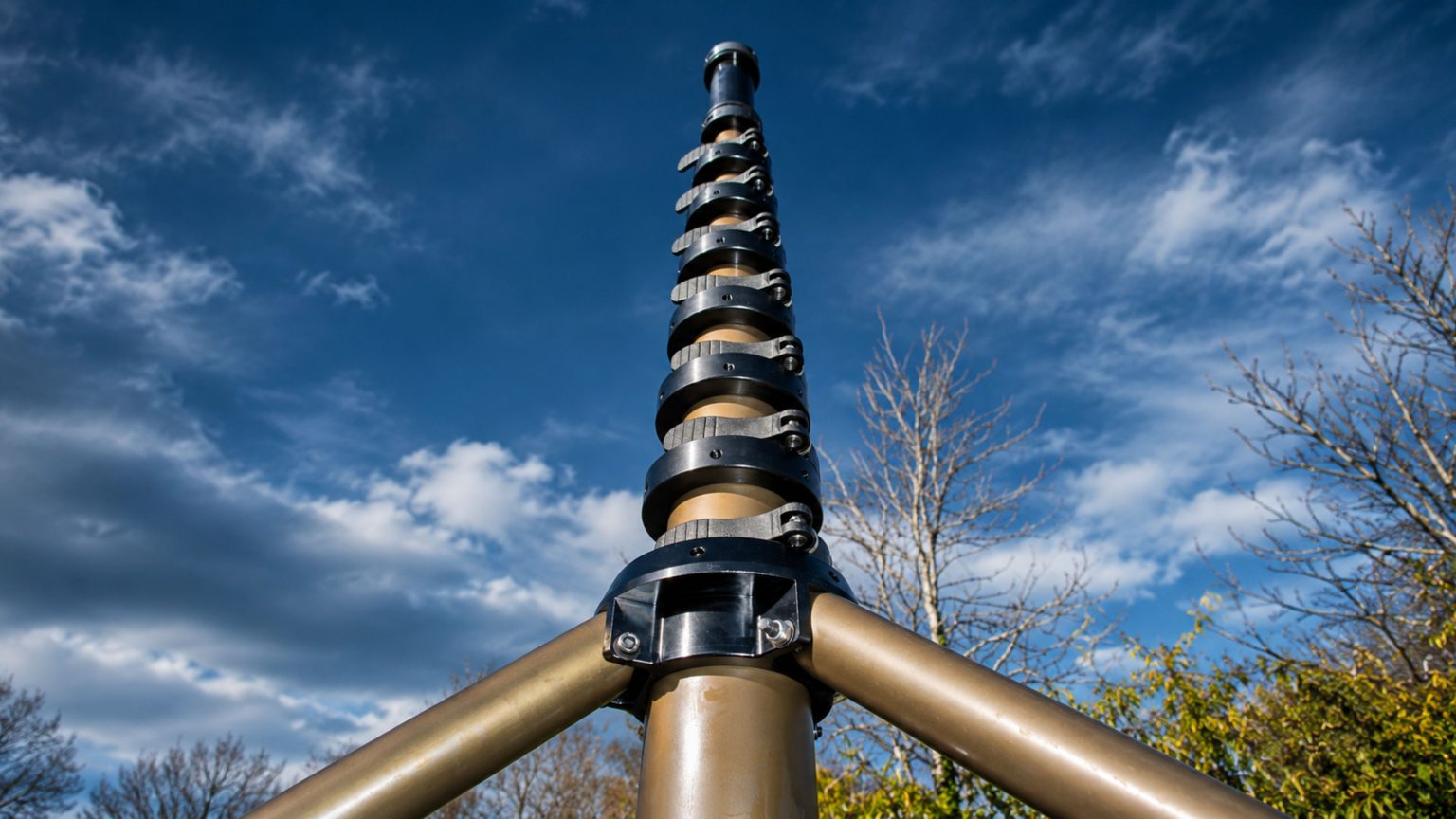
Portable communications masts can provide a practical way to establish communications infrastructure where a permanent mast installation is not suitable or required.
They may be used for temporary communications, field operations, emergency response, events, remote sites or other situations where equipment needs to be deployed and moved as operational requirements change.
The mast needs to suit the antenna and equipment it will support, the environment it will operate in and the practical realities of transporting and deploying it.
So, what should you consider when choosing a portable communications mast?
Where will the mast be used?
The first consideration should be the intended application. A mast being deployed regularly between different locations will have different requirements from one that is moved occasionally and left in position for longer periods.
Consider:
- Whether the installation is temporary or semi-permanent
- How frequently the mast will be moved
- The type of site where it will be deployed
- Access to the site
- Available space
- Ground conditions
- Expected environmental conditions
Understanding the operating environment at the outset helps narrow down the most suitable mast design.
What height do you need?
Mast height can influence antenna performance and coverage, but the highest possible mast is not necessarily the right choice. The required height will depend on factors such as the communications requirement, terrain, surrounding obstacles, antenna characteristics and the intended operating frequency. For some applications, increasing antenna height can help improve line of sight and coverage. However, height also needs to be considered alongside stability, deployment requirements, wind loading and the overall size and weight of the system. The objective should be to achieve the required operational performance rather than simply selecting the tallest available mast.
What equipment will the mast support?
The antenna is an important consideration, but it may not be the only equipment mounted to the mast.
Before choosing a mast, consider the complete headload, including:
- Antennas
- RF equipment
- Cables and associated hardware
- Mounting equipment
- Other equipment required for the application
The weight of the headload is important, but so is the effect that the equipment can have on the mast under environmental loading. The mast needs to be suitable for the intended headload and operating conditions.
How will the mast be transported?
Portability is about more than whether a mast can technically be moved. Consider how the equipment will get to the deployment location. Packed dimensions, overall weight, available vehicles, access routes and the number of people available to handle the equipment can all influence the practical suitability of a mast.
If equipment needs to be transported frequently, these considerations become particularly important. A solution that is technically suitable but difficult to move may not be the most practical solution for the application.
How will it be deployed?
The deployment process should be considered before choosing the equipment.
Think about:
- How many people are available
- How quickly the mast needs to become operational
- Whether additional equipment is required for deployment
- How the mast will be secured
- The available working space
- How it will be recovered after use
Different mast designs can involve different deployment methods, so understanding the operational process can help identify the most appropriate approach. For applications where equipment needs to be deployed quickly, simplicity and ease of use can be particularly important.
What are the ground conditions?
A portable mast still needs a suitable and stable foundation. Ground conditions can vary considerably between deployment locations, particularly for equipment used in field or remote environments.
Before deployment, consideration should be given to the available ground, anchoring arrangements, available space and the loads that the mast and its supporting system will experience. The suitability of the deployment location should always be assessed before equipment is erected.
What environmental conditions will it face?
The environment can have a significant effect on communications infrastructure. Wind loading is particularly important for mast installations, as both the mast and the equipment mounted to it can be affected by wind.
Other environmental factors may include:
- Rain and moisture
- Temperature
- Dust and sand
- Salt exposure
- Terrain
- Frequency of movement and deployment
The expected operating environment should therefore form part of the decision-making process from the beginning.
How often will it be deployed?
A mast that is installed once and remains in position will have different practical requirements from one that is regularly deployed and recovered.
Frequent movement can increase the importance of:
- Ease of deployment
- Packed size
- Handling
- Durability
- Inspection
- Maintenance
- Storage
Considering the equipment’s expected lifecycle and usage pattern can help avoid selecting a solution that is suitable in theory but unnecessarily difficult to operate in practice.
What maintenance will be required?
Maintenance shouldn’t be an afterthought. Portable equipment can experience additional handling and movement compared with permanently installed infrastructure. Regular inspection and appropriate servicing can help identify issues before they affect operation.
When choosing a mast, it is worth considering how accessible components are for inspection and maintenance, what servicing may be required and whether appropriate support will be available throughout its working life. This is particularly important for equipment expected to remain in service for many years.
Learn more about SMC Servicing here to see how you can extend the life of your investment.
Which mast design is right for the application?
There isn’t one mast design that will suit every portable communications application. Sectional, telescopic and pneumatic mast designs each have different characteristics, and the most appropriate option will depend on factors including:
- Required height
- Headload
- Deployment method
- Portability
- Environmental conditions
- Frequency of use
- Available personnel and equipment
The important thing is to start with the operational requirement and work back to the most appropriate design.
Portable communications masts should be chosen around the application
Choosing a portable communications mast is ultimately about finding the right balance between performance, practicality and reliability. The required height is important, but it is only one part of the decision. Headload, transportation, deployment, ground conditions, environmental exposure and maintenance all need to be considered as part of the wider system. Taking the time to understand how and where the mast will be used can help ensure the equipment is appropriate not only when it is first deployed, but throughout its operational life.
At SMC Group, our approach is based on understanding the communications requirement and the environment in which equipment needs to operate. This allows different mast and antenna requirements to be considered as part of the wider communications system.
Explore SMC Group’s mast range and check our SMC Capabilities Guide here. When you’re ready to discuss your next project or specialist requirement, contact our team directly at sales@smcgroupglobal.com or Request a Quote online.