


A temporary communications system should be designed around the operational requirement, deployment environment and expected duration of use. Successful temporary or mobile communications deployments depend on careful planning of coverage, equipment, power, antennas, mast systems and deployment logistics before selecting individual components.
Temporary and mobile sites create a different communications challenge from permanent installations. The system may need to be deployed quickly, operate reliably for a defined period and then be moved or dismantled.
The best approach is to plan the communications requirement before choosing individual pieces of equipment.
1. What is the operational requirement?
The first step in planning a temporary communications system is understanding exactly what the system needs to achieve. Start by establishing:
- Who needs to communicate
- Where they will be located
- How far communications need to reach
- How long the system will operate
- What information needs to be transmitted
- What level of resilience is required
This provides the basis for the technical specification.
2. How should the site be assessed?
Site conditions can significantly affect both communications performance and deployment feasibility. Consider:
- Terrain
- Buildings
- Vegetation
- Available space
- Ground conditions
- Access
- Nearby hazards
- Power availability
- Environmental conditions
Site conditions can affect both radio propagation and the safe deployment of the supporting equipment.
3. Which communications technology is most suitable?
The most appropriate communications technology depends on the application’s coverage, bandwidth and operational requirements.
Factors to consider include:
- Operating frequency
- Required range
- Data throughput
- Interference environment
- Regulatory requirements
- Reliability objectives
Many temporary communications systems combine multiple radio technologies to improve resilience and coverage.
4. How do you select the right antenna?
The antenna plays a critical role in overall system performance and should be chosen according to the communications requirement.
Factors to consider include:
- Frequency range
- Bandwidth
- Polarisation
- Radiation pattern
- Antenna Gain
- Physical size
- Installation height
5. What should be considered when choosing a mast?
The mast should then be specified around the antenna and deployment requirements.
Key factors include:
- Required height
- Payload capacity
- Deployment method
- Packed dimensions
- Wind loading
- Anchoring requirements
- Portability
- Transport
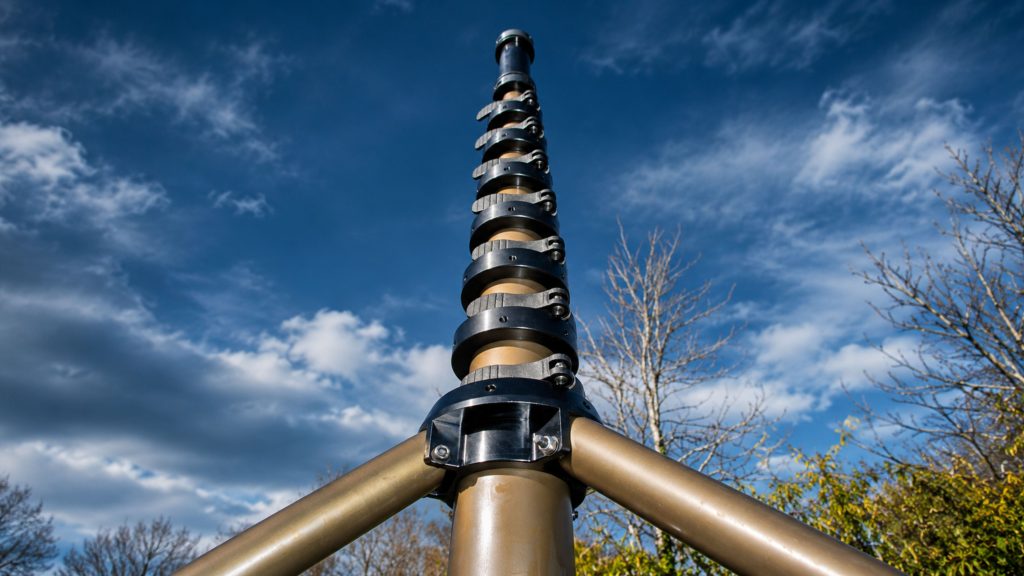
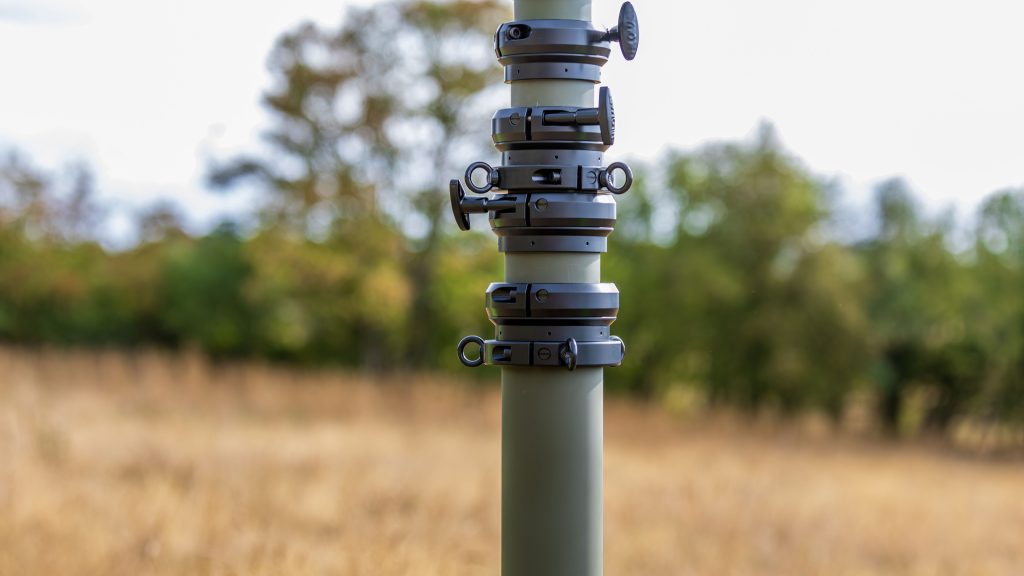
For many mobile deployments, portable telescopic masts provide an effective balance between height, strength and rapid setup. SMC’s SWIFT Series and PackMast Series are great examples of portable rapid deployment masts.
6. How should power be planned?
Temporary sites may not have a reliable mains supply.
Power planning should consider:
- Battery operation
- Generator support
- Renewable energy options
- Equipment power consumption
- Backup power requirements
- Runtime expectations
Power should be treated as a core design element rather than an afterthought.
7. How can deployment be simplified?
Practical deployment planning helps reduce setup time and operational risk. Ask practical questions, such as:
- Who will deploy the system?
- How many people are required?
- What tools are needed?
- How will equipment reach the site?
- How long can deployment take?
- What happens if weather conditions deteriorate?
- How will the system be recovered?
8. Why is maintenance planning important?
A temporary system still needs inspection and maintenance.
Define how faults will be identified and resolved and what happens if a component fails during operation.
A maintenance plan should define:
- Annual servicing
- Inspection intervals
- Fault reporting procedures
- Spare component availability
- Repair responsibilities
- Recovery actions during failures
Proper planning can reduce downtime and improve operational resilience. SMC’s self-service kits are an excellent resource to utilise.
9. Why should systems be tested before deployment?
Test equipment and deployment procedures before the system is required operationally, especially if you are integrating equipment.
This can identify issues with:
- Connectors
- Cables
- Mounting
- Power
- Configuration
- Deployment procedures
- Operator training
At SMC, we have in-house testing capabilities.
Build around the mission
A temporary communications system should be designed around the operational requirement rather than assembled from unrelated components.
SMC provides masts, antennas and RF communications equipment and can develop standard or custom configurations around specific requirements.
Frequently Asked Questions (FAQs)
What is the most important part of planning a temporary communications system?
Understanding the operational requirement first. Equipment selection should follow the required coverage, environment, deployment method and duration.
How quickly should a temporary communications system deploy?
The appropriate deployment time depends on the application and operational requirements. SMC Group can help you create a system to meet your project needs. The SMC PackMast and the SMC SWIFT Series are great examples of rapid deployable masts.
Can temporary communications systems be moved between locations?
Yes. Transportability is a key characteristic of many temporary communications systems, although the specific equipment needs to be designed for repeated deployment and recovery.
Need a Temporary or Mobile Communications Solution?
Whether you’re supporting emergency response operations, defence deployments, critical infrastructure projects, events or remote industrial sites, selecting the right communications system is essential for reliable performance in the field.
SMC Group designs and supplies telescopic masts, antenna systems and RF communications equipment for rapid deployment and temporary communications applications. Standard and custom solutions are available to meet specific operational requirements. Learn more about SMC Standard and SMC Custom.
Talk to the SMC team about your next communications project via sales@smcgroupglobal.com or call +44 (0) 23 8024 6200 directly.