

A high-performance mast may appear to be a simple structure, but engineering a reliable deployable mast involves balancing several competing requirements.
The mast needs to provide height and support a headload while remaining stable in the environment where it is being used. For demanding applications, this can require careful consideration of structural design, materials, deployment and environmental loading.
Designing for the environment
A mast designed for indoor or controlled use faces very different conditions from one deployed outdoors.
Potential considerations include:
- Wind
- Rain
- Temperature
- Terrain
- Corrosion
- Headload weight
- Repeated deployment
- Transportation
The specification should therefore begin with the intended operating environment.
Wind loading
Wind is particularly important when designing an elevated structure. As mast height increases, the structure and its headload can be exposed to greater wind forces. The antenna or other headload also contributes to the overall wind load. This means mast and headload selection should be considered together.
Materials and structural design
Material selection influences the mast’s:
- Strength
- Weight
- Durability
- Corrosion resistance
- Transportability
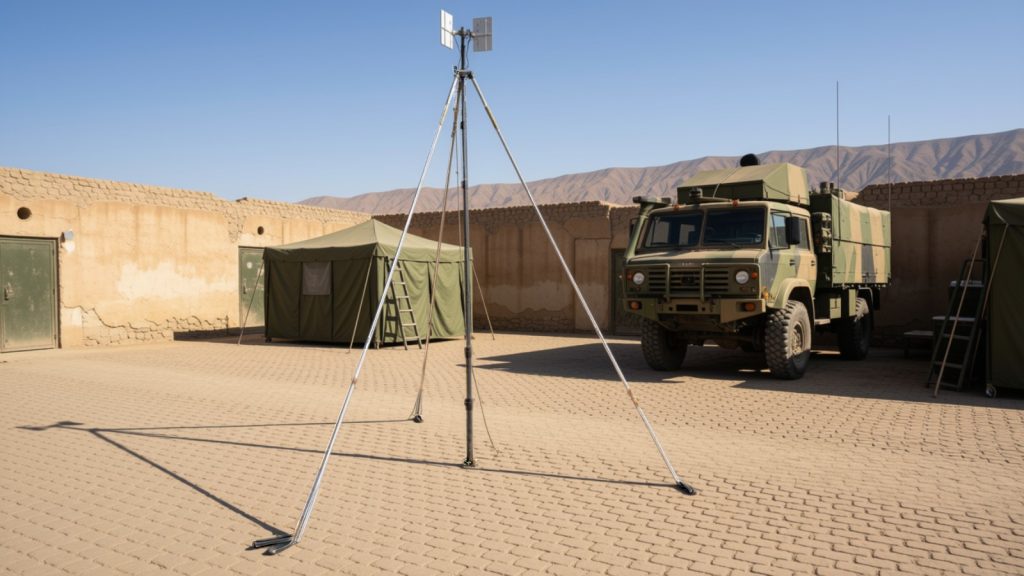
The ideal balance depends on the application. A portable tactical mast, like our SWIFT Series, may prioritise low weight and compact packing, while a more permanent system, such as our Ultralock and HD Series, may place greater emphasis on structural capacity and long-term environmental exposure.
Deployment matters too
A mast needs to be practical to deploy. This includes considering:
- Number of operators
- Setup time
- Ground conditions
- Anchoring
- Available tools
- Recovery procedures
FAQs
What makes a mast suitable for extreme environments?
The mast needs to be designed around the expected environmental, structural and operational conditions, including wind, temperature, terrain and headload requirements.
Does mast height affect wind loading?
Yes. Increasing height can affect the loads experienced by the mast and its supporting structure, which is why environmental conditions need to be considered during design.
Can mast systems support different headloads?
Depending on the mast design, they can support antennas, sensors and other equipment within specified headload and environmental limits.
High-performance mast engineering is ultimately about balance. The mast needs to be strong enough for the environment and headload while remaining practical for the people who need to transport and deploy it. That is particularly important when communications or specialist equipment depends on the mast being operational.
Explore SMC Group’s mast range and check our SMC Custom Guide here. When you’re ready to discuss your next project or specialist requirement, contact our team directly at sales@smcgroupglobal.com or Request a Quote online.