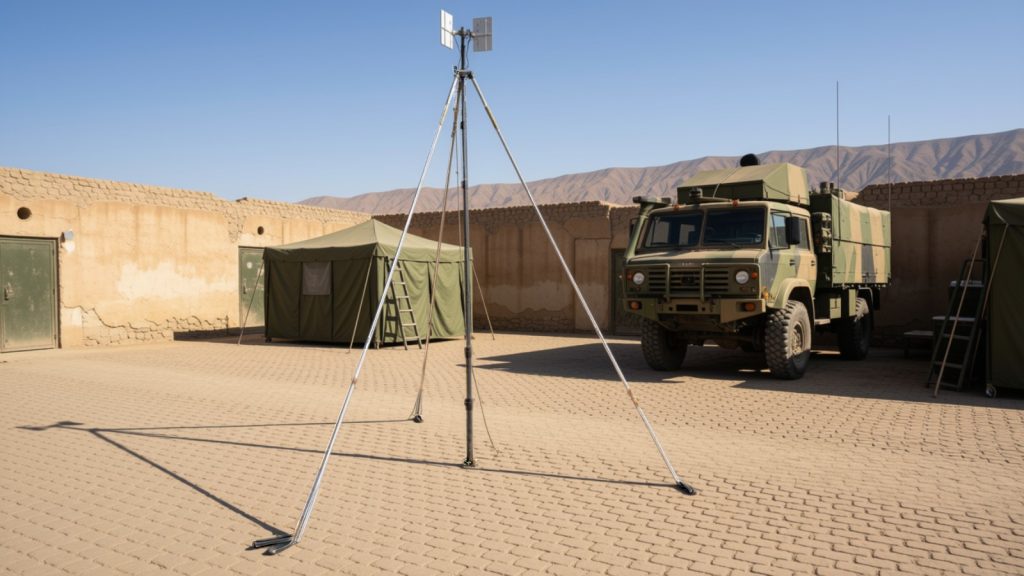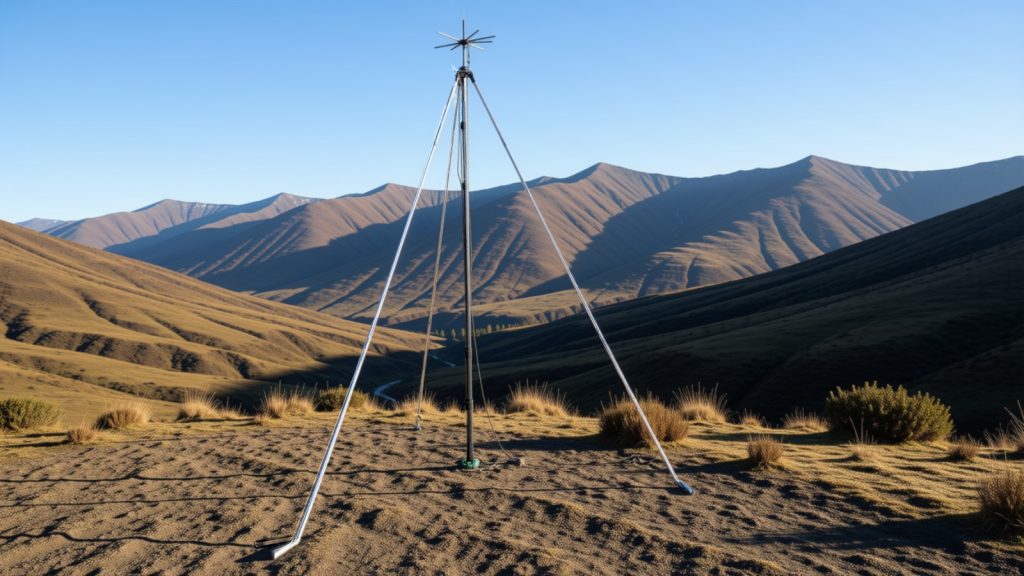


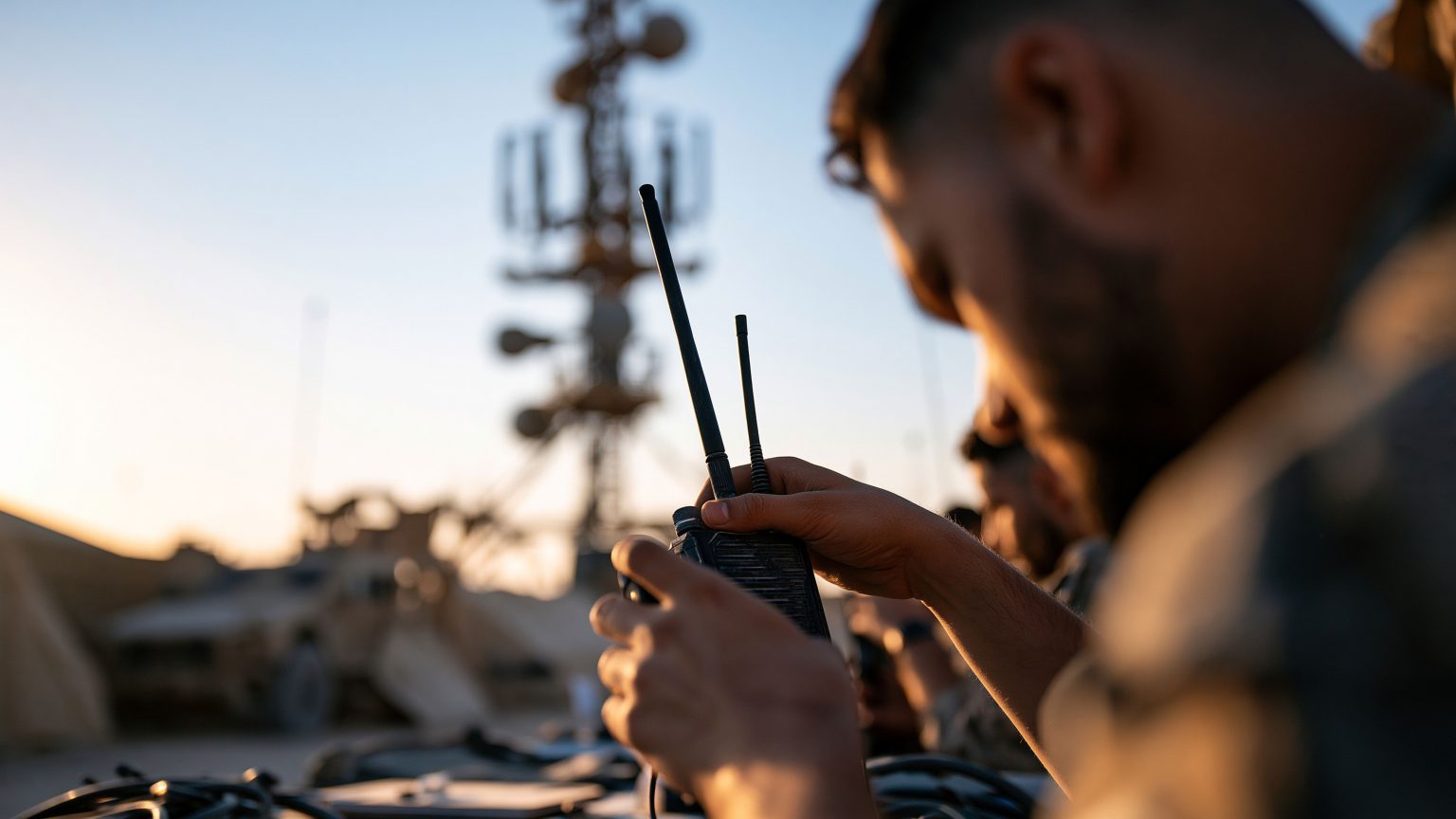
Rapid-deployment communications equipment refers to field-ready radio, mast, and antenna systems designed to be transported, assembled, and operational in minutes. True rapid deployment requires a balance of portability, simplicity, environmental stability and reliable RF performance.
Whether equipping tactical defence teams, emergency first responders, or temporary broadcast operations, here is how modern communications equipment is engineered for speed and reliability.
What does rapid deployment mean in communications?
Rapid deployment means that communications equipment can be transported, positioned, assembled and brought into service efficiently when needed. Depending on the operational application, deployment requirements vary significantly:
- Tactical and Defence: Focuses on manpack portability, low visual/radar footprint, tool-free setup, and immediate readiness.
- Emergency Response: Prioritises rapid vehicle-mounted or trailer-mounted elevation to establish temporary mesh networks or cellular coverage.
- Temporary Broadcast: Demands stable, high-headload structures capable of supporting heavy antenna arrays in variable weather conditions.
7 Core Principles for Rapidly Deployable Communications Systems
- Reduce unnecessary components
A deployment can stall quickly if critical hardware goes missing in the field. High-efficiency systems package compatible accessories, guys, and bases together into unified kits.
SMC Solution: SMC’s PackMast series eliminates loose hardware by utilising integrated section locks, pre-fitted guy collars, and modular accessories housed in a single tactical carry pack.
- Optimise weight and transportability
Rapid deployment begins before the equipment reaches the site. Weight, packed dimensions and carrying arrangements can all affect how fast a team can move.
SMC Solution: SMC’s GRP masts arrive as complete, lightweight transport solutions are supplied as complete systems with base, guy kits and carrying bags. Utilising Glass Reinforced Plastic (GRP) or carbon fibre reduces weight without sacrificing structural strength.
- Simplify mast deployment
Different mast technologies can support different deployment approaches, dependent on the required height, headload, portability and operating environment.
- Manual Push-Up Masts: Lightweight, simple, and ideal for quick single-person setup without power requirements.
- Pneumatic Telescoping Masts: Utilise compressed air for rapid extension, enabling larger headloads and higher elevations with minimal physical effort.
SMC Solution: The SWIFT Series of telescopic masts delivers fast, controlled elevation via integrated hand pumps, vehicle air systems, or compact compressors making it ideal for rapid-response vehicles and mobile command units.
- Integrate the mast for a complete system
The mast is only one part of the communications system. Deployment can be simplified when the mast, antenna, mounting hardware and associated RF equipment are designed to work together.
- Consider vehicle integration
Vehicle-mounted deployment can allow communications equipment to be transported and positioned without requiring a separate fixed installation and options vary based on operational needs.
SMC Solutions: Heavy-duty NH masts are engineered primarily for roof-mounted installations, whereas the SWIFT Series excels as a temporary vehicle-anchored unit utilising a drive-on baseplate called a Rapid Deployment Unit (RDU) secured under a vehicle’s tire for rapid field deployment.
- Design for repeat deployment
Equipment that will be repeatedly deployed needs to withstand the mechanical demands of transport, assembly, operation and recovery. That means durability needs to be considered alongside deployment speed.
Durability Considerations: Anodised aluminium finishings, weather-sealed pneumatic collars, and reinforced composite sections ensure performance remains consistent over repeated deployments.
- Design for intuitive, low-stress assembly
A system should be designed around the people who will actually use it. In high-stress environments, complex setup procedures lead to operational errors. Clear instructions, logical component arrangements and appropriate training can all reduce deployment errors.
Speed should not compromise safety
A mast that deploys quickly is not necessarily a good rapid-deployment system if it cannot safely operate in the intended environment. Designing for rapid setup must always account for safety factors:
- Wind Loading and Headload Weight: Ensure the mast structure and guy-wire radius match the head load and local wind forces.
- Ground Conditions: Utilise adaptable ground anchoring systems (such as hard-ground spikes, sand anchors, or vehicle wheel-mount bases).
- Safe Takedown Procedures: Pneumatic and push-up masts should incorporate controlled-descent features to protect operators during recovery.
FAQs
What makes a communications system ‘rapid deployment’?
Transportability, simple assembly, minimal tooling, efficient mast deployment and integration of the required equipment can all contribute.
Are pneumatic masts faster to deploy than manual masts?
Not universally. Deployment time depends on the mast design, operating procedure and system configuration.
Does rapid deployment mean the equipment is portable?
Not necessarily. A system can be transportable without being designed for individual manual carrying. The required transport method should be established during specification.
How does the SMC PackMast differ from the SMC SWIFT Series?
- PackMast Series: Engineered for ultra-portable, man-portable (manpack) operations where an individual operator needs to transport and deploy an elevated antenna system on foot.
- SWIFT Series: A pneumatic telescopic mast system designed for vehicle integration or rapid ground setup, either by hand or via a compressor to elevate headloads quickly.
Ready to Equip Your Team for Rapid Field Deployment?
Explore how SMC’s PackMast, SWIFT, and NH Series can be tailored to your precise tactical or emergency requirements. Contact our technical team today to discuss your project requirements or Request a Quote.