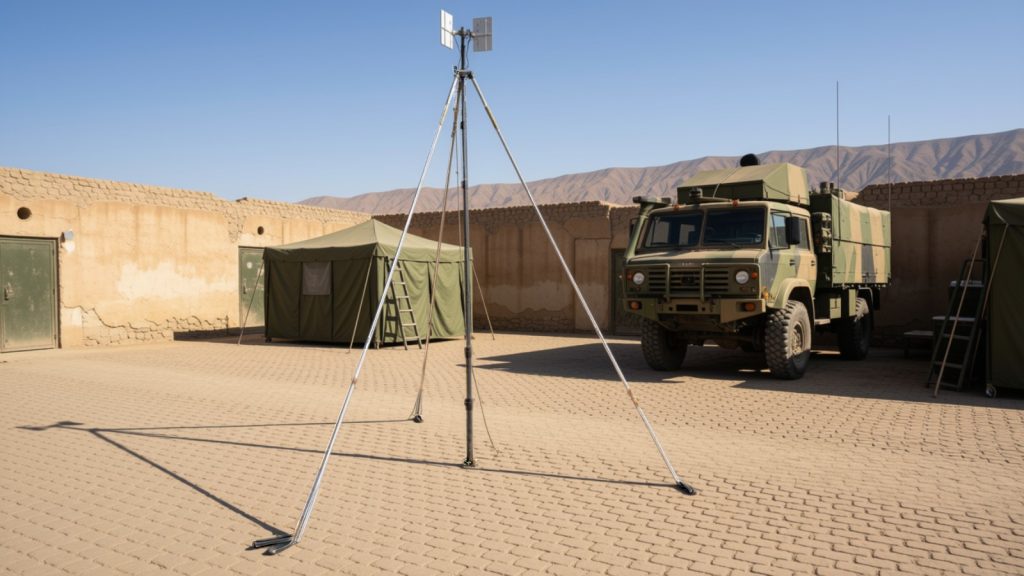



The telecommunications industry continues to evolve in response to growing data demand, expanding 5G coverage and the emergence of new technologies. As we look ahead, the Top 7 telecom infrastructure trends to watch in 2026 will be shaped by how network operators deliver greater capacity and reliability while controlling costs and meeting sustainability targets. Infrastructure sits at the centre of these challenges. Decisions made today around site design, deployment methods, maintenance strategies and equipment selection will influence network performance for years to come.
From AI-powered asset management to sustainable infrastructure solutions, several key trends are shaping how telecom networks are built and maintained in 2026.
1. Continued growth of 5G infrastructure and preparation for 6G
Although 5G deployment is well underway across many markets, network expansion remains a priority for operators worldwide. Delivering the speed, capacity, and low latency expected from 5G requires a greater number of strategically positioned sites, particularly in densely populated urban areas. This creates demand for infrastructure that can be deployed quickly, occupies a smaller footprint and supports increasingly advanced telecommunications equipment.
At the same time, the industry is beginning to prepare for the next generation of connectivity. While 6G networks are still in the research and development phase, operators, equipment vendors, and policymakers are already exploring the infrastructure requirements needed to support future applications such as immersive extended reality (XR), digital twins, advanced AI-driven services and ultra-reliable machine-to-machine communications. As a result, new infrastructure investments are increasingly being designed with future network evolution in mind.
2. Sustainability moves higher on the agenda
Environmental responsibility is becoming a key consideration in telecom infrastructure projects. Many operators have committed to ambitious carbon reduction targets and are reviewing every stage of the infrastructure lifecycle to identify opportunities for improvement. This includes material selection, transportation, installation methods, energy consumption and maintenance practices. Infrastructure providers can contribute significantly by developing solutions that require fewer resources, reduce site disturbance and improve operational efficiency. Telescopic mast systems offer several advantages in this area, including reduced transport requirements, smaller site footprints and simplified maintenance procedures. These benefits help support sustainability objectives without compromising network performance.
3. AI and predictive maintenance become mainstream
Artificial intelligence is changing how telecom infrastructure is monitored and maintained. Traditionally, maintenance has relied on routine inspections or reactive repairs following equipment failures. While effective, these approaches can lead to unnecessary site visits and increased operational costs. Modern monitoring systems can analyse performance data in real time, identifying potential issues before they become critical. This allows operators to schedule maintenance more effectively, reduce downtime and improve overall asset performance. For large network operators managing hundreds or thousands of sites, predictive maintenance can deliver significant operational and financial benefits.
4. Demand for modular infrastructure solutions
Network requirements rarely remain static throughout the life of an infrastructure asset. As technologies evolve and capacity requirements increase, operators need infrastructure that can be adapted without major redevelopment work. This has led to growing interest in modular solutions that allow for upgrades, expansion, and reconfiguration when required. Flexible infrastructure can help reduce future costs while extending the useful life of telecom assets. Telescopic mast systems are particularly well suited to this approach, providing scalable solutions that can support changing operational requirements over time.
5. Increased focus on infrastructure security
Telecommunications networks are critical to businesses, public services, transport systems and emergency communications. Protecting infrastructure from physical and cyber threats remains a priority across the industry. Advances in network technology have introduced new security challenges, particularly as more systems become connected and remotely managed. Operators are investing in stronger security measures that combine physical site protection with advanced cyber security strategies. Secure access controls, remote monitoring capabilities and resilient infrastructure design are becoming standard considerations during project planning. Building secure networks requires a comprehensive approach that addresses both digital and physical vulnerabilities.
6. Infrastructure supporting smart cities and IoT
The continued growth of the Internet of Things is placing new demands on telecom infrastructure. Smart city projects connected transport systems, environmental monitoring networks and industrial automation all rely on reliable communication links between large numbers of devices and sensors. Telecom infrastructure must therefore support a wider range of technologies than ever before. Sites are increasingly required to accommodate communications equipment alongside cameras, sensors, monitoring devices and edge computing systems. This trend is driving demand for adaptable infrastructure capable of supporting a variety of applications while maintaining reliable network performance.
7. Greater international collaboration
Telecommunications have always been a global industry, but collaboration between operators, manufacturers and infrastructure providers continues to increase. International partnerships allow organisations to share expertise, accelerate innovation and adopt best practices more effectively. Collaboration also helps support the development of common standards, improving interoperability across different markets and technologies. As networks become more complex and technology cycles continue to shorten, cooperation across the industry will play an important role in supporting future growth and innovation.
Looking ahead
The trends shaping telecom infrastructure in 2026 and beyond reflect the changing demands placed on modern networks. Greater connectivity, higher performance expectations, sustainability targets and emerging technologies are all influencing how infrastructure is designed and deployed. For operators, flexibility will remain a key consideration. Infrastructure must be capable of supporting current network requirements while allowing for future expansion and technological development.
At SMC, we work closely with telecom providers to deliver mast solutions that meet these challenges. Through continued innovation in telescopic mast design and deployment efficiency, we help support reliable, future-ready networks across a wide range of applications.
Organisations that invest in adaptable, efficient infrastructure today will be better positioned to meet the demands of tomorrow’s communications networks.
If you have a project you would like to discuss, contact us direct at sales@smcgroupglobal.com, or complete our Request a Quote form here.