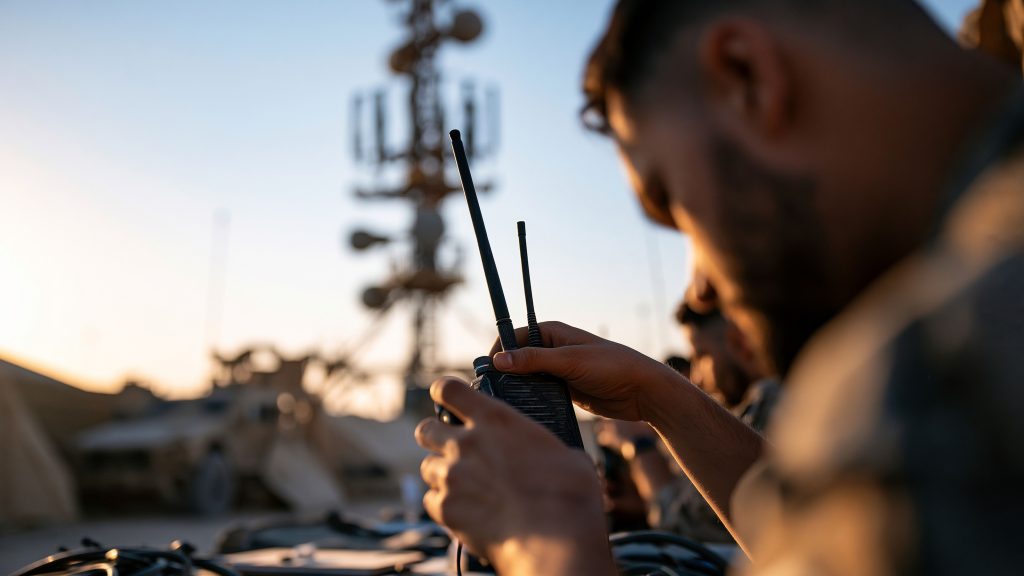



Field communications have always played a critical role in both defence operations and commercial telecommunications. Whether supporting military deployments, emergency response teams, critical infrastructure projects, or expanding mobile networks, reliable communication remains essential for effective decision-making and operational success.
Over the next decade, communication requirements are expected to become more demanding. Greater volumes of data, increasing reliance on connected systems and the need for rapid deployment in challenging environments will continue to shape infrastructure requirements across both sectors.
While the technologies may evolve, the core objective remains unchanged: delivering secure, reliable communications wherever they are needed.
The growing convergence of defence and telecom
The relationship between defence and telecommunications continues to strengthen as both sectors face similar operational challenges. Military organisations require resilient communication networks that can be deployed quickly, operate in remote locations and maintain connectivity under demanding conditions.
Telecom operators face many of the same challenges when expanding coverage into difficult environments, supporting emergency communications, or restoring services following natural disasters. As a result, technologies developed for one sector increasingly influence the other.
Advances in network resilience, mobile infrastructure, deployment efficiency, and communications security often benefit both military and commercial applications. This shared focus on reliability and adaptability is likely to drive continued collaboration and innovation in the years ahead.
Faster deployment will remain a priority
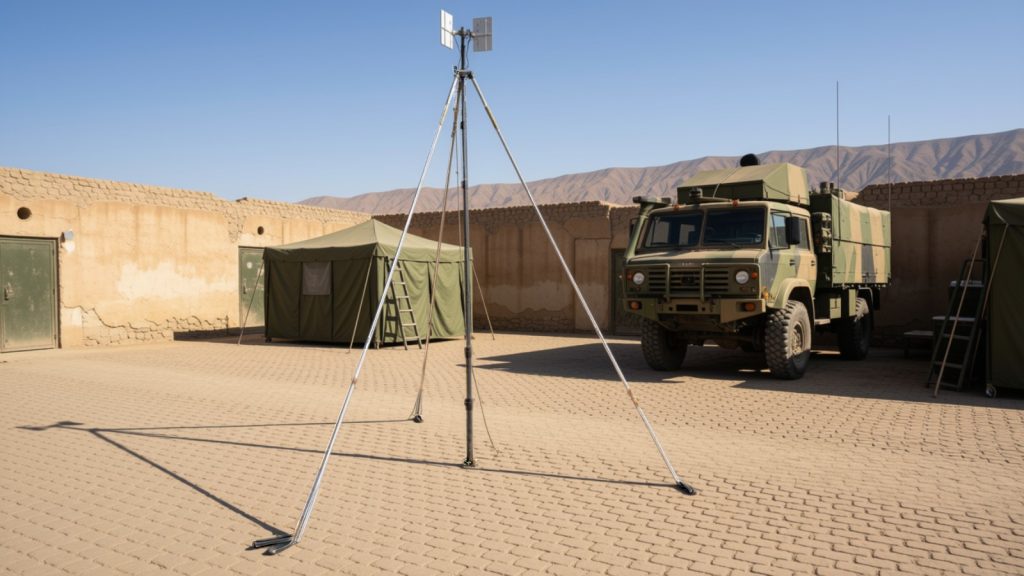
The ability to establish communications quickly is becoming increasingly important. In defence applications, rapid deployment can support operational effectiveness by enabling communication networks to be established wherever they are required. In the commercial sector, faster deployment allows operators to respond more effectively to network demand, temporary events, infrastructure projects and emergency situations. Infrastructure solutions that reduce installation times while maintaining performance standards will continue to play an important role. Lightweight, transportable mast systems are particularly valuable in these environments. Their ability to be deployed quickly, relocated when necessary, and operate in challenging conditions makes them well suited to both defence and commercial communications requirements.
Communications Infrastructure Supporting Data-Driven Operations
Modern operations rely on far more than voice communications alone. Video streaming, sensor networks, autonomous systems, surveillance platforms, and real-time data sharing all place increasing demands on communication infrastructure. By 2035, these requirements are expected to grow further as organisations continue to adopt more connected technologies.
Infrastructure will need to support higher bandwidth requirements while maintaining reliability and security. The ability to transport, deploy and maintain communication assets efficiently will become increasingly important as networks become more complex. This places greater emphasis on infrastructure that is flexible enough to support evolving equipment and changing operational requirements.
The role of artificial intelligence
Artificial intelligence is already influencing how communication networks are managed, and its role is expected to expand over the coming years. Network monitoring systems are becoming more capable of identifying performance issues, predicting maintenance requirements, and supporting operational decision-making. These capabilities can help improve network availability while reducing maintenance costs and operational downtime.
For organisations operating in remote locations or challenging environments, intelligent monitoring systems can provide valuable insights without requiring frequent site visits. While human expertise will remain essential, AI-driven tools are likely to become a standard part of infrastructure management and network operations.
Supporting the next generation of networks
Although 5G deployment continues across many regions, research and development into future communications technologies is already underway. By 2035, networks are expected to deliver greater capacity, lower latency and support an even broader range of connected devices and applications.
The infrastructure supporting these networks must be capable of adapting to evolving technical requirements without requiring complete replacement. This creates demand for mast systems and supporting infrastructure that can accommodate future upgrades while maintaining long-term operational value. Flexible infrastructure investments made today will help organisations prepare for the communication requirements of the future.
Security will continue to drive infrastructure decisions
As communication networks become more connected, security remains a key consideration. Defence organisations and telecom operators alike face growing pressure to protect infrastructure from both physical and cyber threats. Communication systems often support critical operations, making resilience and reliability essential.
Future infrastructure strategies are likely to place increased emphasis on secure deployment, resilient network architecture, and robust asset protection measures. Infrastructure providers will play an important role in supporting these objectives through durable, reliable solutions designed to perform in demanding environments.
Building resilient communications for the future
While it is impossible to predict exactly what field communications will look like in 2035, several trends are already clear. Networks are becoming more data-driven, deployment speed remains a priority and infrastructure must support increasing levels of connectivity while maintaining reliability and security. For both defence organisations and telecom operators, adaptability will remain a critical requirement. Infrastructure must be capable of supporting new technologies, evolving operational needs and changing deployment environments.
At SMC Group, we continue to develop mast solutions designed to meet these challenges. Through a focus on reliability, rapid deployment and long-term performance, our infrastructure supports communications networks across defence, telecommunications, emergency response and critical infrastructure sectors.
If you have a project you would like to discuss, contact us direct at sales@smcgroupglobal.com, or complete our Request a Quote form here.