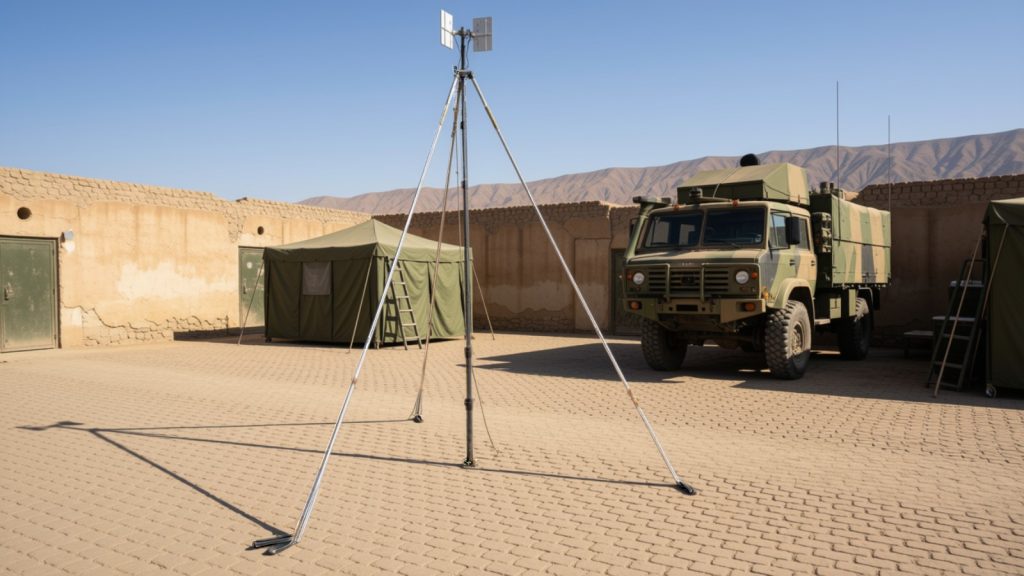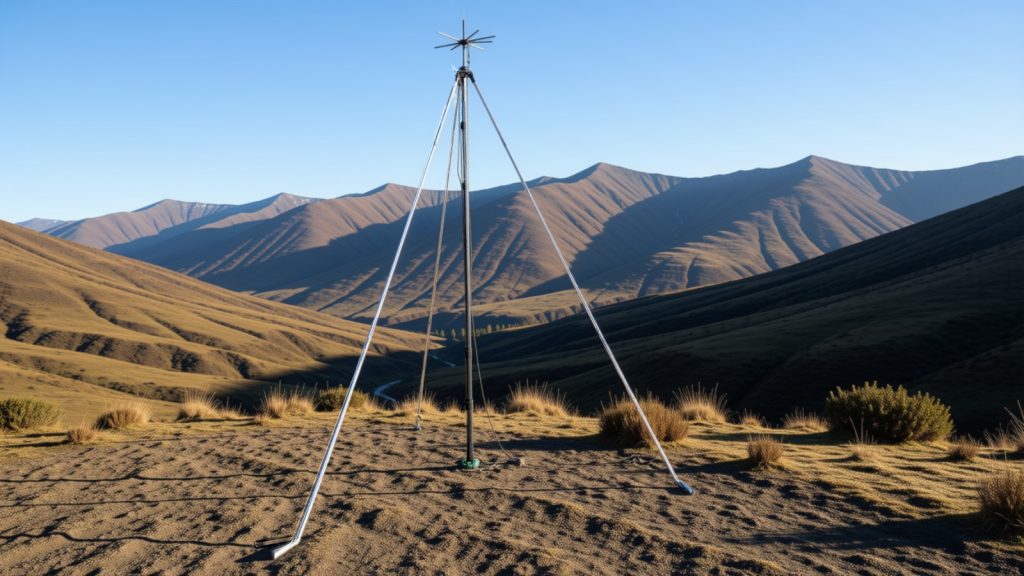



What is a dipole antenna?
A dipole antenna is a simple yet widely used type of antenna that consists of two conductive elements. These elements are typically straight and equal in length, with their ends connected to a transmission line or feedline. The feedline is responsible for connecting the dipole antenna to the transmitter or receiver.
The two conductive elements of a dipole antenna are oriented in opposite directions, with the centre of the antenna acting as the point of connection to the feedline. The length of the dipole elements is typically half the wavelength of the signal being transmitted or received.
How does it work?
Dipole antennas work based on the principle of resonance. When an alternating current is applied to the dipole, it creates an oscillating electric field between the two conductive elements. This electric field generates electromagnetic waves that radiate into space, allowing for the transmission or reception of signals.
Benefits of choosing a Dipole Antenna:
- Simplicity: Dipole antennas have a straightforward design, making them easy to construct and understand.
- Wide Bandwidth: Dipole antennas can cover a wide frequency range, providing versatility in various applications.
- Omni-directional Radiation Pattern: Dipole antennas radiate signals in all directions perpendicular to their axis, making them suitable for applications where coverage is required in multiple directions.
- Low Cost: Due to their simple design, dipole antennas are often cost-effective compared to more complex antenna types.
Disadvantages of Dipole Antennas:
- Sensitivity to Nearby Objects: The performance of dipole antennas can be affected by nearby objects such as buildings, trees, or other antennas, leading to potential signal degradation or interference.
- Lower Gain: Dipole antennas typically have lower gain compared to more directional antenna designs, resulting in a shorter effective range.
- Size Limitations: Dipole antennas can become physically large for lower frequency signals, which may not be suitable for compact or space-constrained applications.
Despite these limitations, dipole antennas remain widely used in various applications, including radio broadcasting, military operations, wireless communication systems, and amateur radio. Their simplicity, wide bandwidth, and suitability for short-range applications make them a popular choice.