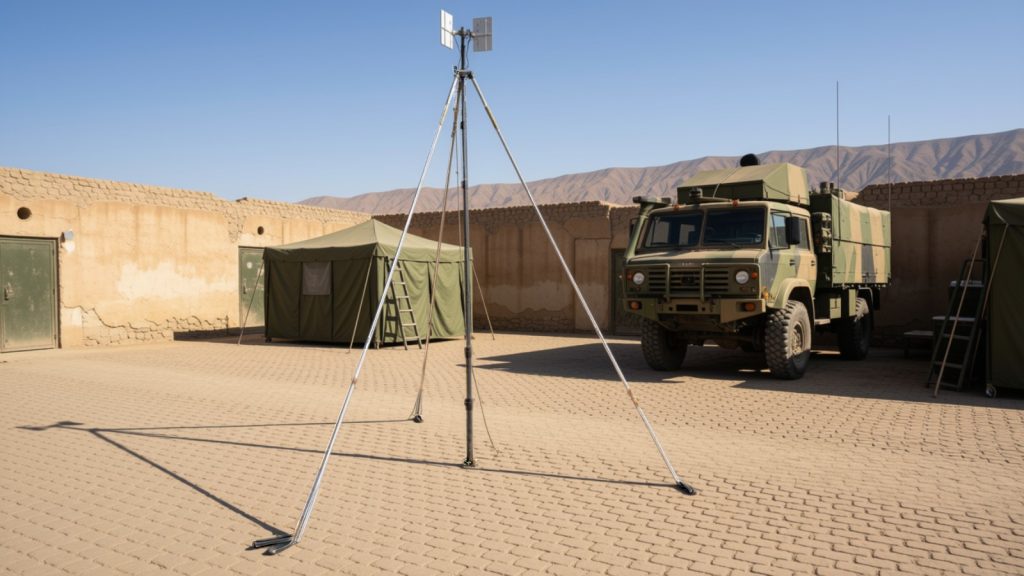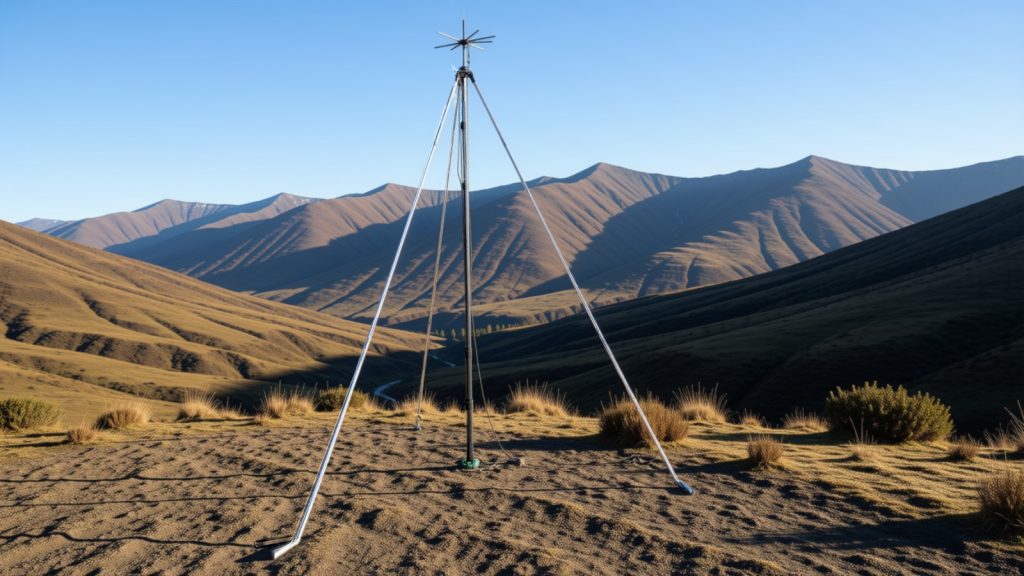



Reliable weather monitoring depends on more than accurate sensors—it requires infrastructure that can perform consistently in challenging environments. A telescopic meteorological mast is often an ideal solution for this type of reliable and adaptable weather monitoring.
SMC designed and manufactured a bespoke telescopic meteorological mast for deployment across Australia, providing a lightweight, transportable and corrosion-resistant solution for organisations collecting critical weather data. Engineered for rapid deployment and long-term reliability, the mast enables field teams to install weather monitoring equipment quickly while delivering a stable platform for accurate meteorological measurements in remote, coastal and high-wind environments.
This case study explains the engineering challenges, the bespoke solution developed by SMC and the operational benefits delivered in the field.
What is a telescopic meteorological mast?
A telescopic meteorological mast is a portable structure used to support weather monitoring equipment such as anemometers, wind vanes, temperature and humidity sensors, solar radiation sensors and data logging systems.
Unlike permanent meteorological towers, telescopic masts can be transported easily, deployed quickly and dismantled when monitoring is complete. They are commonly used for environmental monitoring, temporary weather stations, wind resource assessments, research projects and infrastructure developments where reliable weather data is essential.
The Challenge
Australia presents some of the world’s most demanding conditions for outdoor infrastructure. Weather monitoring equipment must continue operating reliably despite exposure to intense UV radiation, coastal salt spray, high winds, dust, heavy rainfall and significant temperature fluctuations.
The client required a telescopic meteorological mast capable of:
- Supporting multiple meteorological sensors
- Remaining lightweight for rapid deployment
- Being transported in standard utility vehicles
- Withstanding harsh environmental conditions
- Operating without permanent foundations
- Being installed quickly by small field teams
- Delivering long-term reliability with minimal maintenance
Meeting these requirements required a bespoke engineering approach rather than relying on a standard mast system.
The Solution
SMC designed and manufactured a lightweight telescopic meteorological mast using corrosion-resistant aluminium with a high-quality anodised finish to maximise durability in demanding outdoor environments.
The telescopic design allows the mast to be transported in a compact configuration before being extended safely on site, making it suitable for temporary and semi-permanent weather monitoring applications across remote and coastal Australia.
The mast was engineered to support a wide range of environmental monitoring equipment, including:
- Anemometers
- Wind vanes
- Temperature sensors
- Humidity sensors
- Solar radiation sensors
- Data logging systems
- Additional meteorological instrumentation
To improve field performance and operational efficiency, the system was designed to:
- Deploy in approximately 15 minutes
- Be installed by a two-person team
- Require minimal specialist tools
- Integrate with guy-wire stabilisation systems
- Fit inside standard utility vehicles for transport
- Reduce manual handling during installation
- Provide excellent structural rigidity under wind loading
The result was a portable weather monitoring solution built around the Swift mast, combining lightweight construction with dependable long-term performance.
Why Aluminium Was Chosen
Material selection played an important role in the project’s success.
Anodised aluminium provides an excellent balance of strength, durability and low weight while offering outstanding resistance to corrosion. This makes it particularly well suited to Australia’s coastal regions, where salt spray can significantly accelerate deterioration in untreated materials.
The lightweight construction also improves transportability and reduces manual handling during deployment, allowing field teams to install and recover the mast more safely and efficiently.
How the Telescopic Design Improved Deployment
One of the client’s primary objectives was to minimise installation time without compromising stability.
The telescopic mast design enables transportation in a compact form before being extended on site, reducing logistical complexity and eliminating the need for specialist lifting equipment.
Field teams can deploy, commission and begin collecting weather data in approximately 15 minutes, allowing multiple monitoring locations to be established within a single day while improving operational efficiency.
Delivering a Stable Platform for Accurate Weather Monitoring
Reliable meteorological data depends on stable sensor positioning.
The mast was engineered to minimise structural movement under wind loading, reducing vibration at sensor mounting points and helping maintain accurate measurements throughout operation.
When combined with the integrated guy-wire stabilisation system, the structure provides dependable performance even during sustained high-wind conditions, ensuring consistent data collection across a wide range of environments.
Improving Safety for Field Teams
Safety was another key consideration during the design process.
The lightweight aluminium construction reduces manual handling throughout transportation, installation and retrieval. The telescopic extension mechanism also limits the amount of time operators spend working at height compared with conventional mast systems.
The result is a faster, safer and more repeatable installation process for teams operating in remote locations.
Technical Overview
| Feature | Specification |
| Mast Type | Telescopic meteorological mast |
| Material | Anodised aluminium |
| Deployment Time | Approximately 15 minutes |
| Installation | Two-person team |
| Transport | Standard utility vehicle |
| Stabilisation | Guy-wire system |
| Applications | Weather monitoring, environmental monitoring, temporary weather stations |
| Operating Environment | Remote, coastal and high-wind locations |
Results
The completed telescopic meteorological mast delivered measurable operational improvements throughout deployment and ongoing use.
Key outcomes included:
- Improved corrosion resistance in coastal environments
- Faster installation and pack-down times
- Reduced manual handling during deployment
- Greater structural stability under wind loading
- Improved sensor accuracy through reduced vibration
- Lower ongoing maintenance requirements
- Increased reliability of long-term weather monitoring
- Improved operational efficiency for field teams
The finished solution provides organisations with a robust, transportable weather monitoring platform capable of delivering consistent performance across Australia’s diverse environmental conditions.
Frequently Asked Questions
What is a telescopic meteorological mast used for?
A telescopic meteorological mast supports weather monitoring equipment such as anemometers, wind vanes, temperature sensors and environmental monitoring instruments. It is commonly used for temporary weather stations, environmental monitoring, research projects and wind resource assessments.
Why choose a telescopic meteorological mast?
Telescopic masts are lightweight, portable and quick to deploy. They provide a practical solution where weather monitoring equipment needs to be installed temporarily or in remote locations without permanent infrastructure.
Why is aluminium used for meteorological masts?
Aluminium offers an excellent combination of strength, low weight and corrosion resistance. An anodised finish further protects the mast from salt spray, UV exposure and harsh outdoor environments, helping extend operational life.
How quickly can a telescopic weather monitoring mast be installed?
Depending on the configuration, lightweight telescopic meteorological masts can typically be installed by two operators in approximately 15 minutes without specialist lifting equipment.
Engineering Bespoke Meteorological Mast Solutions
Every weather monitoring project presents unique operational challenges. By combining engineering expertise, durable materials and practical design, bespoke telescopic meteorological masts can improve deployment efficiency, operator safety and the accuracy of long-term meteorological data collection.
With more than 67 years of engineering experience, SMC Group designs and manufactures bespoke meteorological masts, communication masts, RF antennas and specialist mast systems for organisations operating in demanding environments worldwide. Through in-house engineering, UK manufacturing and collaborative product development, we deliver solutions that are built around each customer’s operational requirements and designed for long-term performance.
Learn more about how SMC can help with your next project by downloading our Capabilities Guide or Requesting a Quote direct here.