


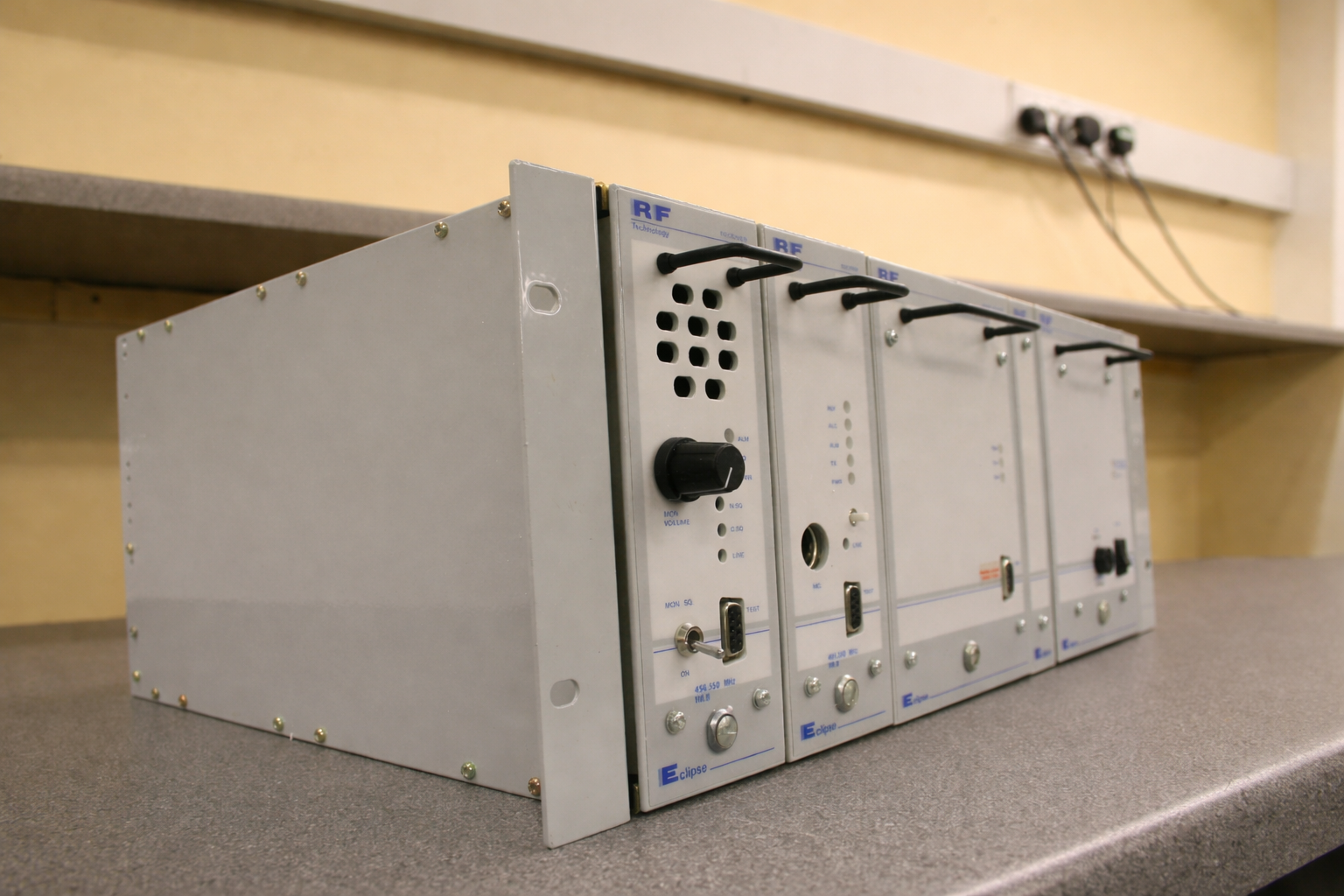
Although the principles of RF communications have been established for many decades, the systems that support them continue to evolve as industries require greater reliability, resilience and efficiency. Understanding how RF communications function, and how they are applied across different sectors, provides useful context for organisations that depend on wireless technologies to support critical operations.
The Fundamentals of RF Communications
RF communications refer to the transmission of information using radio waves within the electromagnetic spectrum. These signals carry data between transmitters and receivers through antennas, allowing devices to exchange information without the need for physical cabling. In practice, an RF communication system typically includes transmitters, receivers, antennas, transmission lines and supporting infrastructure. Each component must be engineered to operate within a specific frequency range and to maintain signal clarity across the intended coverage area. Environmental factors such as terrain, buildings, weather conditions and electromagnetic interference can influence signal propagation. As a result, RF communication systems must be designed with careful consideration of frequency selection, antenna placement, transmission power and coverage requirements.
Defence and Tactical Communications
In defence environments, RF communications form the backbone of command, coordination and situational awareness systems. Tactical radio networks enable communication between personnel, vehicles, command centres and unmanned systems across wide operational areas. Reliability is essential in these contexts, as systems must operate across varied terrain and remain functional in challenging conditions including extreme temperatures, vibration and physical stress. RF communications equipment in defence settings is often deployed on mobile platforms or in temporary field installations, requiring robust design and the flexibility to support changing operational needs.
Security
Security organisations and operators of critical infrastructure rely on RF communications to support monitoring systems, coordination networks and operational data exchange. Wireless networks connect surveillance platforms, sensors and communications equipment with central control facilities, allowing information to be transmitted in real time. In these environments, dependable communication is essential for maintaining situational awareness and supporting rapid response to incidents. RF systems must therefore provide consistent coverage across complex sites while minimising interference from surrounding infrastructure and electronic equipment.
Telecommunications
Telecommunications is one of the most prominent sectors relying on RF communications. Mobile phone networks, wireless broadband services and point-to-point data links all depend on radio frequency transmission. Telecommunications infrastructure uses RF technologies to connect mobile devices with base stations and to transmit data between network nodes across wide geographical areas. Because multiple services must operate within limited spectrum allocations, efficient frequency management and careful network planning are essential to ensure reliable connectivity and consistent service performance.
Broadcast and Media Transmissions
Broadcasting has long been one of the most visible applications of RF communications. Television and radio services rely on radio frequency signals to transmit content to audiences across large geographical areas. Broadcast transmission systems are engineered to maintain stable signal quality during continuous operation and to deliver reliable coverage to receivers located at varying distances from the transmitter. In addition to permanent broadcast facilities, RF links are also used in outside broadcast and event production environments to transmit audio, video and operational data between mobile production equipment and central broadcast networks.
Utilities
Utilities organisations depend on reliable communication networks to monitor and manage distributed infrastructure such as electrical substations, renewable energy installations, water treatment facilities and pipeline systems. RF communication technologies enable telemetry systems to transmit operational data between remote assets and control centres. Because many of these installations are located in remote or difficult-to-access areas, wireless communication provides a practical alternative to wired networks. Reliable RF connectivity allows operators to maintain visibility across large infrastructure networks and respond quickly to operational changes or faults.
Transport
Modern transport infrastructure relies increasingly on wireless communication between vehicles, monitoring systems and operational control centres. RF communication systems support applications such as vehicle tracking, signalling coordination, wireless monitoring and operational communication across rail, road and logistics networks. In transport environments, communication systems must remain reliable despite vibration, movement and changing environmental conditions. Effective RF communications contribute to safer and more efficient operations across complex transport systems.
Meteorological and Environmental Monitoring
Environmental monitoring and meteorological research frequently rely on RF communication to transmit data from remote sensors and measurement instruments. Weather stations, atmospheric monitoring equipment and environmental research platforms use wireless links to relay information to analysis centres. These installations are often located in exposed environments where wired infrastructure is impractical. Reliable RF communication ensures that environmental data can be transmitted consistently, supporting weather forecasting, climate analysis and scientific research.
Emergency Services
Emergency services depend heavily on RF communications to coordinate operations during incidents and disasters. Police, fire and medical teams rely on radio systems to maintain communication across operational areas, particularly in situations where conventional communications infrastructure may be unavailable or damaged. Portable RF systems can be deployed rapidly to establish temporary communication networks during large-scale incidents or disaster recovery efforts. These systems allow responders to exchange information, coordinate resources and maintain situational awareness in rapidly evolving situations.
Engineering Considerations in RF Systems
Across all industries, RF communication systems must balance technical performance with environmental resilience. Engineers must consider factors such as frequency allocation, signal propagation characteristics, antenna configuration, transmission power and potential sources of interference. Supporting infrastructure, including antennas, masts and mounting systems, must also be designed to ensure structural stability and optimal signal performance. Careful engineering and installation help ensure that RF systems deliver consistent and reliable performance throughout their operational lifespan.
Conclusion
RF communications are a fundamental element of modern infrastructure, enabling wireless transmission of information across a wide range of industries and environments. Although often operating behind the scenes, RF communications provide the connectivity that allows complex technical systems to function reliably in an increasingly interconnected world.
If you have any questions or would like to discuss your requirements, our team would be happy to help: sales@smcgroupglobal.com, or call +442380246200 (UK). You can also request a quote here.