

SMC Group has a long history of designing and manufacturing mast systems that meet the technical and environmental demands of organisations in sectors including defence, security, telecommunications, utilities, transport, meteorology and emergency services. This article explains how mast systems function and why they are integral to diverse applications in modern infrastructure and operational deployments.
Understanding Mast Systems
At the core, mast systems serve a single purpose: to elevate equipment so it can perform as intended. However, achieving this reliably requires careful engineering. Structures must be stable, resistant to environmental loads such as wind and temperature fluctuations and capable of supporting the weight of mounted equipment with minimal vibration or deflection.
In addition, mast systems used in mobile, temporary or remote environments must be rapidly deployable and robust enough to operate without extensive site preparation. These considerations influence material choice, structural design, locking mechanisms and installation methods.
Defence and Tactical Operations
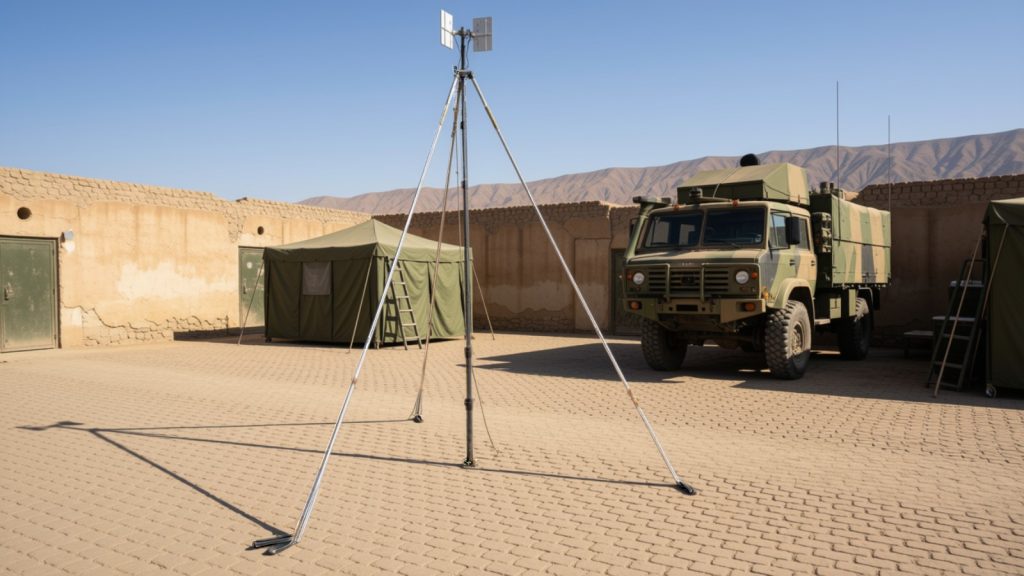
In defence, mast systems are used to support a variety of equipment including communications antennas, signal intercept devices, tactical sensors and surveillance platforms. Elevating equipment enhances signal range and line‑of‑sight, which is critical in both planning and execution phases of military operations.
Defence mast applications require a strong understanding of environmental stressors and the ability to withstand shock, vibration and temperature extremes. Those masts must be engineered to integrate with vehicles, static sites, temporary encampments and forward operating bases, while maintaining structural integrity and safety for personnel.
Security
For governments, security agencies and critical infrastructure operators, mast systems form part of broader situational awareness and resilience strategies. They support elevated cameras, perimeter sensors, RF communications and detection systems.
The engineering challenge in this sector is to ensure consistent coverage and stability. Structures must accommodate payloads of varying size, maintain calibration of sensors, and accommodate power and data connections in secure and often constrained environments.
Elevated infrastructure also contributes to incident response capabilities, enabling operators to monitor large areas and react to evolving situations with confidence.
Telecommunications and Broadcast Networks
In telecommunications and broadcasting, mast systems enable efficient signal propagation and network coverage. Placing antennas, microwave links and repeaters at height reduces interference caused by terrain, buildings and vegetation, contributing to better network performance.
Telecommunications mast design involves careful consideration of transmission frequencies, equipment weight, wind loading and maintenance access. Similarly, for broadcast applications, masts are used to carry antennas and supporting equipment in fixed or temporary installations, such as outdoor events or outside broadcast units.
These requirements influence decisions about mast type, deployment method and structural specification.
Utilities
In utilities – including power generation, water management and energy distribution – mast systems are used to elevate remote monitoring equipment, environmental sensors and communications hardware. By raising these devices above ground clutter, networks can transmit data more reliably and with greater consistency.
Remote installations often present challenges such as difficult access, limited power availability and exposure to environmental stressors. Mast systems in this context must be engineered for durability, corrosion resistance and minimal maintenance, while also accommodating lightweight instrumentation or communications payloads.
Transport
Mast systems support transport and logistics operations by providing elevated platforms for communications, monitoring and safety systems along road, rail and freight networks. These may include cameras for traffic observation, wireless networks for vehicle‑to‑infrastructure communication or environmental sensors for site monitoring.
Because transport environments often involve vibration, movement and variable weather conditions, mast designs must prioritise structural stability and compatibility with existing infrastructure. Integration with power, control and data systems also requires careful planning and engineering.
Meteorology and Environmental Science
Accurate environmental monitoring depends on stable, elevated platforms for instruments such as anemometers, barometers and radiation sensors. Mast systems in meteorological applications are designed to minimise interference from ground effects, shielding and turbulence.
Engineering considerations include site conditions, expected wind regimes, temperature gradients and long‑term exposure to the elements. Mast systems in this context play a crucial role in ensuring that collected data reflects true atmospheric conditions, supporting forecasting, modelling and research.
Emergency Services, Government and Humanitarian Operations
Emergency services, civil authorities and humanitarian organisations deploy mast systems to establish or augment communications and sensor infrastructure during planned events, crisis responses or temporary operations.
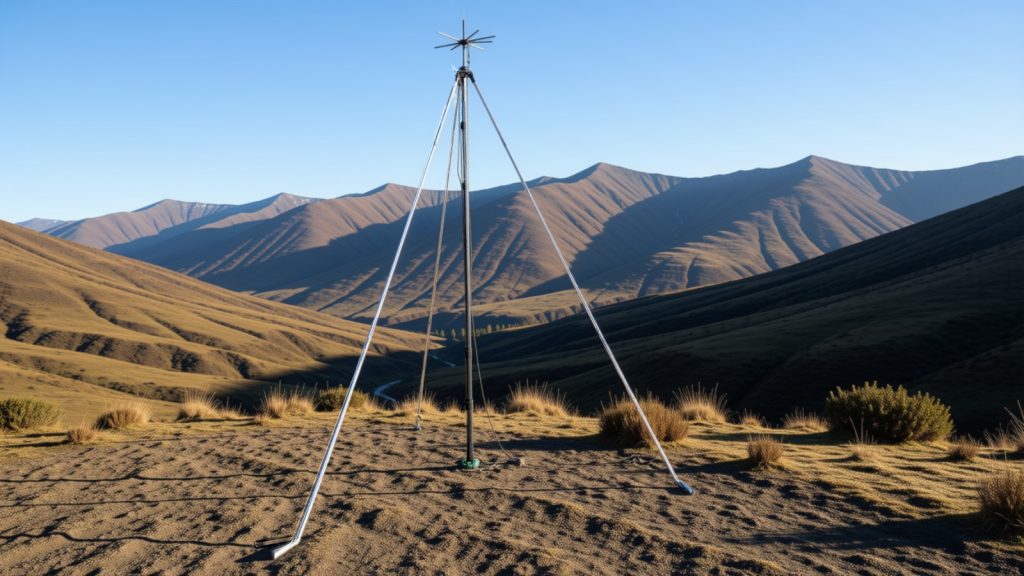
These deployments emphasise speed, reliability and adaptability. Mast systems must be transportable, quick to erect and suitable for a wide range of terrain types. They may be mounted on vehicles, trailers or temporary bases, and must remain operational with minimal onsite support.
Industrial, Commercial and Event Applications
In industrial and commercial environments, mast systems provide height for lighting, safety monitoring, temporary communications and other operational equipment. For example, construction sites might use elevated monitoring systems to manage site safety, while event operators deploy masts to support lighting or communications for large gatherings.
These applications require practical engineering solutions that are appropriate for temporary use while maintaining safety standards and structural performance.
Understanding how mast systems integrate with technical requirements and environmental conditions enables organisations to select and deploy solutions that meet both operational goals and safety standards.
If you have any questions or would like to discuss your requirements, our team would be happy to help: sales@smcgroupglobal.com, or call +442380246200 (UK). You can also request a quote here.