

Directional couplers are a cornerstone in the world of RF (Radio Frequency) and microwave communication systems, integral in applications ranging from broadcasting to telecommunications and even in defence technology.
Understanding how these components work is key to appreciating their role in modern communication. This blog provides an in-depth look at the functionality of directional couplers and their significance in various sectors.
Basic Concept of Directional Couplers
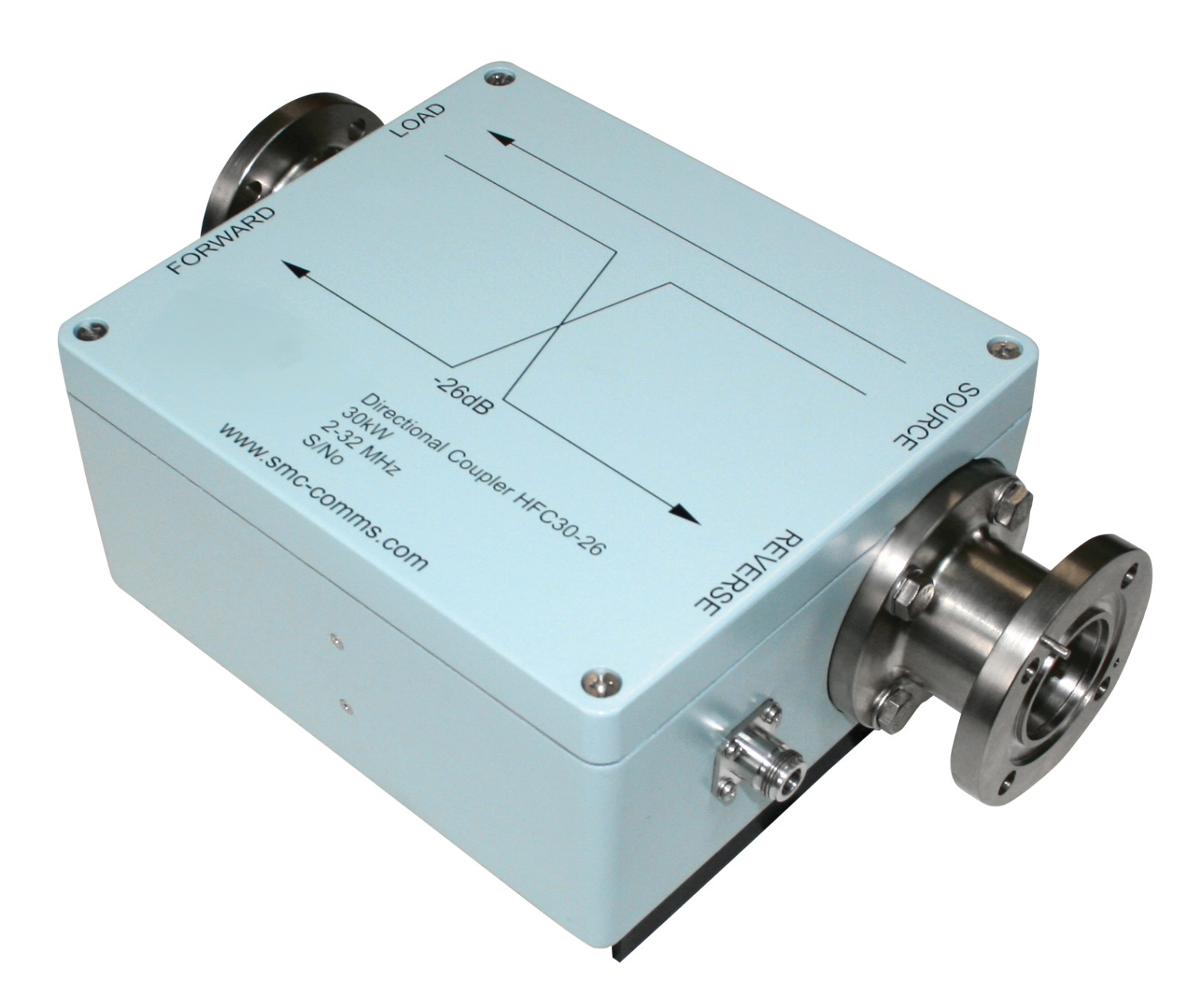
A directional coupler is a device used in RF technology to couple a specific portion of the electromagnetic power in a transmission line. The primary function is to allow the signal in one direction to pass through while a signal from another direction is coupled out. This capability is essential for signal routing, monitoring power levels, and measuring reflected waves.
Working Principle of Directional Couplers
The core principle of directional couplers involves separating and routing electromagnetic signals based on their direction of travel. They consist of a main line, which carries the signal, and a coupled line, where a portion of the signal is diverted. The key attributes of a good directional coupler are directivity (the ability to distinguish between forward and reverse power) and isolation (the degree to which the signal is kept separate from other components).
Types of Directional Couplers
There are several types of directional couplers, including:
- Dual Directional Couplers: Ideal for measuring both forward and reflected power.
- Bi-Directional Couplers: Used in applications where signals in both directions need to be monitored simultaneously.
- Quadrature Couplers: Often used in RF systems to create signals that are 90 degrees out of phase with each other.
Key Parameters and Performance Metrics
The performance of directional couplers is measured using parameters like:
- Coupling Factor: The ratio of power output from the coupled port to the input port.
- Insertion Loss: The loss of signal power resulting from the insertion of the coupler in the transmission line.
- VSWR (Voltage Standing Wave Ratio): Indicates how efficiently RF power is transmitted.
- Directivity: A measure of how well the coupler separates forward and reverse signals.
Applications in Various Sectors
Directional couplers are used in various industries, for instance:
- In broadcasting for signal routing and power monitoring.
- In telecommunications for managing signal strength and quality.
- In defence systems for radar and wireless communications.
Directional couplers are integral components in RF and microwave systems, playing a crucial role in the management and distribution of signals. Their ability to direct and control signal flow is vital in maintaining the efficiency and effectiveness of communication systems.
To learn more about the range of directional couplers and related services offered by SMC, visit our product range.